

Table of Contents
- Key Points
- What Is Seborrheic Dermatitis?
- Recognizing Seborrheic Dermatitis Symptoms
- What Causes Seborrheic Dermatitis?
- Common Seborrheic Dermatitis Triggers and Risk Factors
- Seborrheic Dermatitis Treatment Options
- When to See a Dermatologist in Greenville
- Schedule an Evaluation
- Frequently Asked Questions
- References
Key Points
- Seborrheic dermatitis is a chronic inflammatory skin condition that most often affects the scalp, face, and upper trunk.
- Symptoms include greasy yellow scales, flaking, redness, and itching, and flares are commonly triggered by stress, cold weather, hormonal shifts, and certain underlying medical conditions.
- Effective seborrheic dermatitis treatment usually combines medicated shampoos, topical antifungals, anti-inflammatory creams, and—in moderate to severe cases—prescription seborrheic dermatitis medication.
Seborrheic dermatitis is extremely common, affecting between 3 and 10 out of every 100 people globally.1 The condition is chronic, relapsing, and frequently misdiagnosed as ordinary dandruff or dry skin, which means patients may spend months or years cycling through over-the-counter products before consulting a dermatologist. Understanding what drives the disease, how it presents, and which interventions deliver lasting improvements is the first step toward managing it effectively.
What Is Seborrheic Dermatitis?
Seborrheic dermatitis is a common, chronic form of eczema that develops in areas of the body rich in sebaceous glands. The scalp is the most frequently affected region, but the condition can also appear on the eyebrows, sides of the nose, ears, beard area, central chest, and skin folds.2
In infants, a variant known as “cradle cap” typically resolves within the first year of life. In adults, the disease tends to follow a relapsing course, with periods of remission interrupted by flares that may persist for weeks or months.
Although seborrheic dermatitis is not contagious and is not caused by poor hygiene, its visible nature can cause significant distress. Patients often report social discomfort related to facial redness or visible flaking on the hairline, ears, or shoulders. For this reason, treatment goals at Rogers Dermatology focus not only on symptom control but also on improving long-term quality of life.
Recognizing Seborrheic Dermatitis Symptoms
The presentation of symptoms varies by location on the body and skin type, but the most consistent ones are:
- Greasy, yellowish, or white scales overlying patches of pink-to-red skin
- Persistent dandruff that does not improve with standard shampoos
- Itching, burning, or stinging in affected areas
- Redness along the sides of the nose, eyebrows, or behind the ears
- Crusting or flaking within the beard or along the hairline
- Well-demarcated patches on the central chest in men
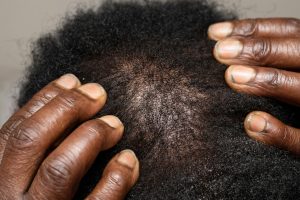
On darker skin tones, lesions may appear hypopigmented or hyperpigmented rather than red, which can delay diagnosis. An experienced dermatologist in Greenville will be equipped to recognize these variations and distinguish seborrheic dermatitis from conditions that mimic it, such as psoriasis, rosacea, tinea capitis, and atopic dermatitis.
What Causes Seborrheic Dermatitis?
There is still much debate about the causes of seborrheic dermatitis, but current evidence points to a multifactorial process involving three principal contributors:
- Malassezia yeast: This fungus lives on healthy skin but can trigger inflammation in susceptible individuals by metabolizing sebum into irritating free fatty acids.3
- Sebaceous gland activity: Areas with dense sebaceous glands provide the lipid substrate that Malassezia requires, which explains why the scalp, face, and chest are most commonly affected.
- Individual immune response: Patients with seborrheic dermatitis appear to mount a heightened inflammatory reaction to Malassezia metabolites, with an associated impairment of the skin barrier.
These factors also help explain why the condition is more prevalent in patients with certain medical conditions, including Parkinson disease, HIV infection, and other forms of immune dysregulation. In patients with advanced HIV, for instance, the prevalence has been reported as high as 85 percent.4
Common Seborrheic Dermatitis Triggers and Risk Factors
While the underlying biology drives susceptibility, identifiable triggers often precipitate flares. Patients are encouraged to track their symptoms in relation to potential triggers, which commonly include:
- Emotional or physical stress
- Cold, dry weather or sudden changes in humidity
- Hormonal fluctuations, particularly during adolescence and adulthood
- Fatigue and disrupted sleep
- Harsh hair products, fragrances, or alcohol-based skincare
- Concurrent neurological or immunologic conditions
Identifying personal triggers can help reduce flare frequency, even before pharmacologic therapy is initiated.
Seborrheic Dermatitis Treatment Options
Although there is no permanent cure, seborrheic dermatitis treatment can produce significant improvements when tailored to disease severity and location on the body. A typical treatment plan will entail several approaches.
Medicated Shampoos
For scalp involvement, antifungal and keratolytic shampoos can help. Active ingredients commonly include:
- Ketoconazole
- Ciclopirox
- Selenium sulfide
- Zinc pyrithione
- Salicylic acid
- Coal tar
Patients are typically instructed to allow the product to remain on the scalp for several minutes before rinsing, and to rotate active ingredients periodically to maintain efficacy.
Topical Antifungals
Topical ketoconazole, ciclopirox, and other azole-class antifungals can combat Malassezia on facial and truncal skin. These agents are generally well tolerated and form the backbone of long-term maintenance therapy.
Topical Anti-Inflammatories
Short courses of low-potency topical corticosteroids can rapidly reduce redness and itching during flares. Because long-term steroid use on the face may cause skin thinning, telangiectasias, or rebound flares, dermatologists often transition patients to non-steroidal options for these areas.
Prescription Seborrheic Dermatitis Medication
For patients who do not respond well to topical therapy, your Greenville dermatologist may prescribe oral antifungal medication for short, defined courses. Oral therapy is reserved for moderate to severe cases due to the potential for systemic effects, and is almost always paired with topical maintenance.
Lifestyle and Skincare Adjustments
Basic lifestyle choices can support pharmacologic therapy and reduce recurrence. Thes einclude:
- Using gentle, fragrance-free cleansers
- Avoiding alcohol-based toners and astringents
- Regular but not excessive shampooing
- Stress management and adequate sleep
- Sun protection (note that, while some patients improve with controlled sun exposure, others worsen)
When to See a Dermatologist in Greenville
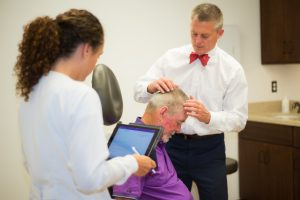
Over-the-counter products may control mild scalp flaking, but patients should consult a dermatologist in Greenville if any of the following apply:
- Symptoms persist despite consistent use of medicated shampoos
- Redness, scaling, or itching affects the face, ears, or chest
- The condition interferes with sleep, work, or social functioning
- Lesions develop signs of secondary bacterial infection, including weeping, crusting, or pain
- An infant develops widespread or persistent cradle cap
Schedule an Evaluation
If persistent flaking, redness, or itching is interfering with your daily life, a consultation with a board-certified dermatologist in Greenville can help provide a diagnosis and establish a sustainable treatment plan.
If you are looking for the best dermatologist in Greenville, SC, for treating seborrheic dermatitis, consider Rogers Dermatology. We will provide a comprehensive evaluation and individualized treatment plans at every stage of severity. Contact us today to set up an appointment.
Frequently Asked Questions
Is seborrheic dermatitis the same as dandruff?
Dandruff is generally considered a milder form of seborrheic dermatitis limited to the scalp. True seborrheic dermatitis involves inflammation, redness, and often extends beyond the scalp to the face, ears, or chest.
Can seborrheic dermatitis be cured permanently?
No permanent cure currently exists for seborrheic dermatitis. The condition is chronic and tends to relapse, but consistent treatment can achieve long periods of remission and significantly reduce flare severity.
Is seborrheic dermatitis contagious?
No. Although Malassezia yeast plays a role in the disease, it is part of the normal skin flora and cannot be transmitted from person to person.
Can diet affect seborrheic dermatitis?
Evidence linking specific foods to flares is limited. Some patients report improvement with anti-inflammatory dietary patterns, but dietary modification alone is not considered a primary treatment.
How long does it take for seborrheic dermatitis medication to work?
Most patients notice improvement within two to four weeks of starting a tailored regimen. Maintenance therapy is typically required to prevent recurrence.
References
- “Overview: Seborrheic dermatitis,” Institute for Quality and Efficiency in Health Care (IQWiG), February 2024, https://www.ncbi.nlm.nih.gov/books/NBK532846/.
- Mayo Clinic Staff, “Seborrheic dermatitis,” Mayo Clinic, July 2024, https://collinshammett.com/blog/building-on-american-values-collins-hammett-construction-celebrates-the-4th-of-july/.
- C. S. L. Kamamoto, A. S. Nishikaku, O. F. Gompertz, et al., “Cutaneous fungal microbiome: Malassezia yeasts in seborrheic dermatitis scalp in a randomized, comparative and therapeutic trial,” Dermato Endocrinology, October 2017, https://www.robertmrogersmd.com/services/#psoriasis.
- Dan Tucker, Hasnain A. Syed, and Sadia Masood, “Seborrheic Dermatitis,” National Center for Biotechnology Information, National Library of Medicine, March 2024, https://www.ncbi.nlm.nih.gov/books/NBK551707/.