

Table of Contents
- Key Points
- What Is Eczema?
- What Causes Eczema Flares?
- Adult Eczema: Not Just a Childhood Condition
- Does Aloe Vera Help Eczema?
- Everyday Habits That Support Eczema-Prone Skin
- How a Dermatologist Treats Eczema
- When to See a Dermatologist
- Find Eczema Care With a Dermatologist in Greenville
- Frequently Asked Questions
- References
Key Points
- Eczema is not a single disease but a group of related inflammatory skin conditions, and identifying the specific type is an important first step toward effective treatment.
- Allergic eczema and adult eczema are common but frequently overlooked, in part because both can closely resemble other forms of the condition.
- Home remedies such as aloe vera may soothe some people’s skin, but they work best as a complement to, rather than a replacement for, care from an exerpeienced dermatologist.
For a condition so common, eczema is surprisingly misunderstood. Around 31.6 million people in the United States (roughly 10 percent of the population) have some form of eczema.¹ Yet many people still think of it as a childhood rash that fades with age, or assume that any dry, itchy patch is simply “sensitive skin.” In reality, eczema is an umbrella term for several inflammatory skin conditions with distinct causes, triggers, and treatment needs, and it can appear for the first time at nearly any stage of life.
Below, we explain how the major types of eczema differ, what tends to set off flares, how allergic eczema and adult eczema fit into the larger picture, and what the evidence says about popular home remedies like aloe vera.
What Is Eczema?
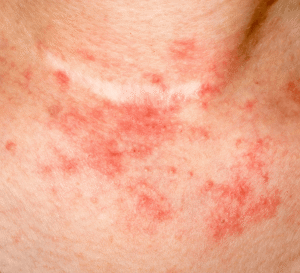
Eczema (also called “dermatitis”) describes a family of conditions that cause the skin to become inflamed, itchy, dry, and irritated. On lighter skin tones, eczema often appears red; on darker skin tones, it may look brown, purple, or ashen gray.2 Over time, repeated scratching can leave affected skin thickened and leathery, a change dermatologists call “lichenification.”
The American Academy of Dermatology recognizes seven main types of eczema.3 These include:
- Atopic dermatitis: The most common form, which usually begins in childhood and is often associated with a personal or family history of asthma or hay fever.
- Contact dermatitis: A reaction that develops where the skin has touched an irritating substance or an allergen.
- Dyshidrotic eczema: Small, intensely itchy blisters on the hands, feet, or both.
- Hand eczema: Dry, thick, scaly, or cracked skin on the hands, often linked to frequent washing or workplace exposures.
- Neurodermatitis: Very itchy patches that grow thicker the more they are scratched.
- Nummular eczema: Round, coin-shaped patches of irritated skin that may itch, ooze, or crust.
- Stasis dermatitis: Irritation of the lower legs related to poor circulation, most often seen in older adults.
It is also possible to have more than one type of eczema at the same time, which is one reason a careful evaluation matters.
What Causes Eczema Flares?
Eczema rarely has a single cause. In atopic dermatitis, for example, the skin’s protective barrier does not retain moisture as effectively as it should, leaving the skin more vulnerable to dryness, irritants, and allergens. Genetics, immune function, and environmental exposures all contribute.
Common flare triggers include:
- Cold, dry air: Winter weather and indoor heating draw moisture out of the skin.
- Fragrances and dyes: Scented soaps, lotions, and detergents are frequent culprits.
- Harsh cleansers: Products that strip away the skin’s natural oils can weaken its barrier further.
- Environmental allergens: Pollen, mold, dust mites, and pet dander may worsen symptoms in some people.
- Rough fabrics: Wool and some synthetic materials can irritate sensitive skin.
- Temperature changes: Overheating, sweating, and sudden shifts in temperature can provoke itching.
- Illness and stress: Colds, the flu, and emotional stress are all well-documented triggers.
- Allergic Eczema: When the Skin Reacts to What It Touches
Allergic eczema is a common way of describing allergic contact dermatitis, a form of eczema that develops when the immune system reacts to a specific substance that comes into contact with the skin. It differs from irritant contact dermatitis, which is caused by harsh substances such as cleaning products or solvents and tends to appear quickly. Allergic reactions, by contrast, are typically delayed, sometimes surfacing days after exposure, which is one reason the cause can be so difficult to pin down.
Frequent sources of allergic eczema include:
- Fragrances: Found in perfumes, cosmetics, shampoos, and many personal care products.
- Preservatives: Common in skin care products, cosmetics, and household cleaners.
- Nickel: Present in jewelry, belt buckles, watchbands, and some electronics.
- Plants: Poison ivy, poison oak, and poison sumac are classic examples.
Notably, a person can develop an allergy to a product they have used without trouble for years. Allergic contact dermatitis can also coexist with atopic dermatitis and look nearly identical to it, so it is worth considering when eczema appears suddenly, changes in location or severity, or stops responding to a treatment that previously worked.
Patch testing is the standard method for identifying these allergies. During patch testing, small amounts of common allergens are applied to the back under adhesive patches and left in place for about two days, followed by one or more follow-up readings to check for reactions. Patch testing is different from the skin-prick testing used to diagnose hay fever and similar allergies, so a negative prick test does not rule out allergic eczema. Once a trigger has been identified, avoiding it becomes the cornerstone of treatment.
Adult Eczema: Not Just a Childhood Condition
Many people assume eczema is something children outgrow, and many children do see their symptoms improve with age. However, adult eczema is common, and it generally takes one of two forms: eczema that persists from childhood, or eczema that begins in adulthood. Research suggests that a large share of adults with atopic dermatitis first developed symptoms as adults, and that adult-onset cases may present somewhat differently from those that begin in childhood.
In adults, eczema can take many forms. Some adults have the same pattern they experienced as children, while others develop it on the hands or feet, around the eyes, or as thick, scaly patches of skin.
Daily life often shapes how adult eczema behaves. Frequent handwashing, workplace chemicals, and personal care products can all contribute, which is why hand eczema is especially common among healthcare workers, hairstylists, mechanics, and others who work with their hands.
Because adult-onset eczema can resemble other conditions, including psoriasis, fungal infections, and allergic contact dermatitis, a new rash that appears later in life warrants a professional evaluation.
Does Aloe Vera Help Eczema?
Interest in natural remedies is understandable, and aloe vera for eczema is one of the most frequently searched home treatments. Aloe vera gel has a long history of use for minor burns and skin irritation, and some people find that it cools and calms itchy, inflamed skin.
The scientific evidence, however, is limited. According to the National Center for Complementary and Integrative Health, there is not enough reliable research to show whether aloe vera helps eczema. And while topical aloe is generally well tolerated, there have been occasional reports of burning, itching, and eczema-like rashes after use.4 This is especially relevant for people with allergic eczema, since aloe is a plant extract and many commercial aloe products also contain fragrance, alcohol, or preservatives.
If you would like to try aloe vera, a few precautions can reduce the risk of a reaction:
- Test a small area first: Apply a small amount to unaffected skin and watch for redness or itching before using it more widely.
- Choose simple formulas: Look for products with a short ingredient list and no added fragrance, dyes, or alcohol.
- Avoid raw or broken skin: Cracked or oozing areas may sting and are more prone to irritation.
- Keep your prescribed treatment: Use aloe as a complement to, not a substitute for, the plan your dermatologist recommends.
- Stop if symptoms worsen: Increased redness, itching, or new patches may signal a reaction.
Everyday Habits That Support Eczema-Prone Skin
Consistent daily skin care is one of the most effective ways to reduce flares, and it may lessen the need for medication. Helpful habits include:
- Short, lukewarm baths or showers: Hot water strips the skin of its natural oils, increasing dryness.
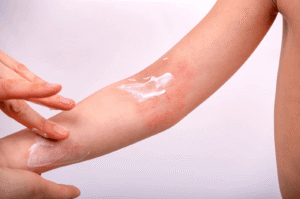
- Moisturizing right after bathing: Applying a thick, fragrance-free cream or ointment while the skin is still slightly damp helps lock in moisture.
- A simpler routine: Using fewer products reduces exposure to potential irritants and allergens.
- Fragrance-free laundry detergent: Residue from scented detergents can linger in clothing and bedding.
- Soft, breathable fabrics: Cotton is typically gentler on the skin than wool or rough synthetic blends.
- A humidifier in winter: Adding moisture to indoor air can help offset the drying effects of heating systems.
- Short fingernails: Keeping nails trimmed limits skin damage from scratching, especially overnight.
How a Dermatologist Treats Eczema
There is currently no cure for eczema, but it can often be well controlled with the right plan. Because the best approach depends on the type of eczema, its severity, and its triggers, treatment begins with an accurate diagnosis. Depending on your needs, a dermatologist may recommend:
- Prescription topical medications: Anti-inflammatory creams and ointments that calm flares and relieve itching.
- Patch testing: A diagnostic tool for identifying specific allergens when allergic eczema is suspected.
- Phototherapy: Carefully controlled exposure to ultraviolet light, which can help when topical treatments are not enough.
- Systemic and biologic medications: Oral or injectable treatments for moderate to severe eczema that does not respond to other approaches.
When to See a Dermatologist
Gentle skin care and over-the-counter moisturizers are often enough for mild dryness, but certain signs suggest it is time for a professional evaluation. If you are looking for a dermatologist in Greenville to assess a new or stubborn rash, watch for the following:
- Disrupted sleep: Itching keeps you awake at night or interferes with work and daily activities.
- Persistent or spreading rash: Symptoms return or spread despite consistent home care.
- Signs of infection: Oozing, yellow crusting, pus, pain, or warmth may mean the skin has become infected.
- New eczema in adulthood: A rash that appears for the first time later in life warrants a clear diagnosis.
- Suspected allergies: Flares seem to follow the use of certain products, jewelry, or materials.
- A routine that stops working: Treatment that once controlled your symptoms no longer helps.
Find Eczema Care With a Dermatologist in Greenville
Living with eczema can be frustrating, but you do not have to sort through triggers, products, and remedies on your own. At Rogers Dermatology, we help patients understand which type of eczema they have, identify what may be driving their flares, and build a treatment plan that fits both their skin and their daily routine.
Whether you are managing a lifelong condition, a new rash in adulthood, or a reaction you suspect is allergic, working with a Greenville, SC, dermatologist offers something an internet search cannot: a diagnosis grounded in a careful look at your skin and your history. If you have been searching for the “best dermatologist in Greenville, SC” to help you manage eczema, we invite you to contact our office to schedule an evaluation.
Frequently Asked Questions
What is the main cause of eczema?
There is no single cause. Atopic dermatitis, the most common type, appears to stem from a combination of genetics, an overactive immune response, and a skin barrier that does not retain moisture well. Other types have more specific origins; allergic eczema, for example, results from an immune reaction to a substance that touches the skin.
Is eczema contagious?
Eczema itself is not contagious, so it cannot be passed from one person to another through touch. However, skin that has been broken open by scratching can develop a secondary infection, which is one more reason to keep flares under control and to see a dermatologist if signs of infection appear.
Is there a cure for eczema?
Not at this time, but eczema can usually be well controlled. Consistent skin care, avoiding known triggers, and the right prescription treatment can reduce flares and keep symptoms manageable. Some forms, such as allergic eczema, may clear once the trigger is identified and avoided.
What is the difference between allergic eczema and atopic dermatitis?
Atopic dermatitis is a chronic condition rooted in a weakened skin barrier and an overactive immune response, while allergic eczema is a reaction to a specific substance that touches the skin. The two can look alike and can occur together, which is why patch testing is sometimes needed to tell them apart.
References
- “Eczema Facts,” National Eczema Association, retrieved on November 19, 2026, from: https://nationaleczema.org/research/eczema-facts.
- “Eczema,” Cleveland Clinic, October 2022, https://my.clevelandclinic.org/health/diseases/9998-eczema.
- “Eczema: Types and Treatment,” American Academy of Dermatology Association, retrieved on November 18, 2026, from: https://www.aad.org/public/diseases/eczema/types.
- “Aloe Vera,” National Center for Complementary and Integrative Health, National Institutes of Health, February 2025, https://www.nccih.nih.gov/health/aloe-vera.