

Table of Contents
- Key Points
- What is Skin Pathology?
- Common Conditions Diagnosed Through Skin Pathology
- The Skin Biopsy Process
- Understanding Your Pathology Report
- The Role of Your Greenville SC Dermatologist
- When Should You See a Dermatologist?
- Taking Control of Your Skin Health
- References
Key Points
- Skin diseases impact approximately one in three Americans.1
- Proper diagnosis is imperative for determining the right course of treatment.
- A fuller understanding of skin pathology and what it entails can embolden patients to seek regular, comprehensive dermatological care.
Your skin is your body’s largest organ, covering approximately 22 square feet and accounting for about 16 percent of your total body weight.2 Given its complexity and constant exposure to environmental factors, it is no surprise that skin diseases are fairly common. When unusual symptoms appear—be it a suspicious mole, persistent rash, or unexplained lesion—understanding what is happening beneath the surface requires specialized expertise in skin pathology.
At Rogers Dermatology, our team of skilled dermatopathologists works to ensure accurate diagnoses and effective treatment plans for our patients. The information below gives you a snapshot of the work that we do and what you can expect from a visit or diagnosis. It will help you understand the important role skin pathology plays in your care
What is Skin Pathology?
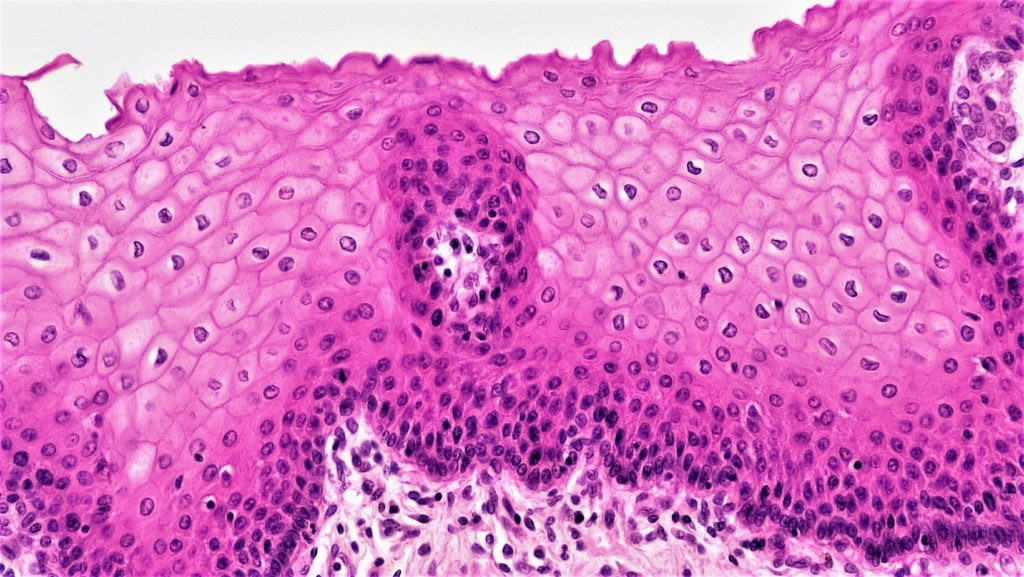
Skin pathology, also known as “dermatopathology,” is a specialized branch of pathology and dermatology that focuses on the microscopic examination and diagnosis of skin diseases, as well as those affecting the adjacent:
- Mucous membranes
- Cutaneous appendages
- Hair
- Nailes
- Subcutaneous tissues3
This field serves as a critical bridge between clinical dermatology and laboratory medicine, helping physicians identify the precise nature of skin conditions that may not be apparent through visual examination alone.
A dermatopathologist is a physician who has completed extensive training in both dermatology and pathology. These specialists examine skin tissue samples under a microscope to:
- Identify cancerous or precancerous cells
- Diagnose inflammatory and infectious skin conditions
- Detect autoimmune skin disease and other systemic disorders affecting the skin
- Determine the best course of treatment based on cellular-level findings
- Provide crucial information about disease prognosis and progression
Common Conditions Diagnosed Through Skin Pathology
Dermatopathology plays a vital role in diagnosing a wide range of conditions. Working with an experienced dermatologist in Greenville SC ensures that your skin samples are interpreted by experienced professionals who understand the nuances of various skin diseases.
Skin Cancers
One of the most critical applications of skin pathology is the detection and classification of skin cancers:
- Basal cell carcinoma: The most common skin cancer, typically appearing on sun-exposed areas
- Squamous cell carcinoma: The second most common type, which can spread if left untreated
- Melanoma: The most dangerous form of skin cancer, requiring early detection and treatment
- Merkel cell carcinoma: A rare but aggressive skin cancer
- Cutaneous lymphomas: Cancers affecting immune cells in the skin
Inflammatory Skin Conditions
Many chronic skin conditions require microscopic examination for accurate diagnosis:
- Psoriasis: Characterized by rapid skin cell turnover and inflammation
- Eczema (atopic dermatitis): Showing specific patterns of inflammation
- Lichen planus: An inflammatory condition affecting the skin and mucous membranes
- Granulomatous diseases: Including sarcoidosis and granuloma annulare4
Autoimmune Skin Diseases
Autoimmune skin disease conditions occur when the immune system mistakenly attacks healthy skin tissue. Dermatopathology is essential for diagnosing:
- Lupus erythematosus: Which can affect the skin and multiple organ systems
- Dermatomyositis: Causing distinctive skin rashes and muscle inflammation
- Bullous pemphigoid: Creating large, fluid-filled blisters on the skin
- Pemphigus vulgaris: Causing painful blisters and sores
- Scleroderma: Leading to hardening and tightening of the skin
Infectious Diseases
Microscopic examination can identify various organisms causing skin infections:
- Fungal infections like ringworm and deep mycoses
- Bacterial infections, including atypical mycobacteria5
- Viral infections such as herpes and warts
- Parasitic infections affecting the skin
The Skin Biopsy Process
When your dermatologist recommends a skin biopsy, it means there is a need to examine your skin tissue more closely. Understanding this process can help ease any concerns you might have:
Before the Biopsy:
- Your dermatologist will explain why the biopsy is necessary and what they are looking for
- The area will be cleaned and numbed with local anesthesia
- You will feel minimal discomfort during the procedure
Types of Skin Biopsies:
- Shave biopsy: Removing the top layers of skin with a small blade
- Punch biopsy: Using a circular tool to remove a small core of skin
- Excisional biopsy: Removing an entire lesion or area of concern
- Incisional biopsy: Removing a portion of a larger lesion for examination
After the Biopsy:
- The tissue sample is preserved and sent to a dermatopathology laboratory
- A dermatopathologist examines thin slices of the tissue under a microscope
- Special stains and techniques may be used to highlight specific cells or structures
- Results typically return within 7 to 10 days, though complex cases may take longer
Understanding Your Pathology Report
When your biopsy results return, your dermatologist will explain the findings. While pathology reports can seem complex, they typically include:
- Specimen description: What tissue was examined
- Microscopic findings: Detailed observations of cell types and patterns
- Diagnosis: The specific condition identified
- Comments: Additional context or recommendations from the dermatopathologist
Your dermatologist will translate these technical details into practical information about your condition and treatment options.
The Role of Your Greenville SC Dermatologist
When you visit Rogers Dermatology, we serve as your primary advocate in the diagnostic process. Here is how we integrate skin pathology into comprehensive patient care:
Clinical Examination:
- Thorough visual assessment of your skin concerns
- Documentation of location, size, color, and characteristics of lesions
- Consideration of your medical history and symptoms
Biopsy Decision and Technique:
- Determining when a biopsy is necessary
- Selecting the most appropriate biopsy technique
- Providing clinical context to the dermatopathologist
Results Interpretation:
- Reviewing pathology reports in detail
- Explaining findings in understandable terms
- Correlating microscopic findings with clinical observations
Treatment Planning:
- Developing a personalized treatment strategy based on pathology results
- Coordinating additional testing or specialist referrals when needed
- Monitoring treatment response and adjusting as necessary
When Should You See a Dermatologist?
If you are experiencing any of the following, it is time to schedule an appointment with your dermatologist in Greenville:
- A new or changing mole or skin growth
- A sore that does not heal within a few weeks
- Persistent itching, redness, or rash
- Sudden changes in skin texture or color
- Painful or bleeding skin lesions
- A family history of skin cancer combined with concerning skin changes
Early detection and accurate diagnosis of skin diseases significantly improve treatment outcomes. Do not wait until a minor concern becomes a major problem.
Taking Control of Your Skin Health
Your skin’s health deserves the same attention as any other aspect of your wellbeing. Understanding the role of skin pathology in dermatologic care can empower you to make informed decisions about your health.
At Rogers Dermatology, we are committed to providing Upstate patients with exceptional dermatologic care backed by precise diagnostic capabilities. Whether you need a routine skin cancer screening, treatment for a chronic skin disease, or evaluation of a concerning skin change, our team combines clinical expertise with advanced diagnostic tools to deliver the best possible outcomes.
If you’re looking for the best dermatologist Greenville has to offer, contact us today to schedule a consultation. Your skin health is too important to leave to chance—let our experienced team provide the expert care you deserve.
References
- “Skin Conditions at a Glance,” National Center for Complementary and Integrative Health, U.S. Department of Health and Human Services, November 2019, https://www.nccih.nih.gov/health/skin-conditions-at-a-glance.
- Hani Yousef, Mandy Alhajj, Adegbenro O. Fakoya, and Sandeep Sharma, “Anatomy, Skin (Integument), Epidermis,” National Center for Biotechnology Information, National Institutes of Health, June 2024, https://www.ncbi.nlm.nih.gov/books/NBK470464/.
- “Dermatopathology,” College of American Pathologists, retrieved on October 29, 2025, from: https://www.cap.org/member-resources/pathology-careers/pathology-subspecialties/dermatopathology.
- Mayo Clinic Staff, “Granuloma annulare,” Mayo Clinic, October 2024, https://www.mayoclinic.org/diseases-conditions/granuloma-annulare/symptoms-causes/syc-20351319.
- Brian Winburn and Tariq Sharman, “Atypical Mycobacterial Disease,” National Center for Biotechnology Information, National Library of Medicine, January 2023, https://www.ncbi.nlm.nih.gov/books/NBK556117/.