

Table of Contents
- Key Points
- What Is Dandruff?
- Why Dandruff Persists
- When to See a Dermatologist for Your Anti-Dandruff Treatment
- Professional Dandruff Treatment Options
- Taking Control of Your Scalp Health
- References
Key Points
- Dandruff is a common dermatological condition that is usually resoved with over-the-counter treatments.
- In some situations, dandruff can persist and even worsen, despite regular treatment.
- Understanding what dandruff is—and what is not—along with key indicators of when it is time to visit your Greenville dermatologist, is essential to effectively combatting the condition.
According to the Journal of Investigative Dermatology, approximately 50 percent of the adult population experiences dandruff at some point in their lives.1 For many, standard over-the-counter treatments simply do not provide lasting relief. When those telltale white flakes keep appearing on your shoulders despite your best efforts with anti-dandruff shampoos, it is time to consider that something more complex might be happening with your scalp.
At Rogers Dermatology, we understand the frustration and embarrassment that come with persistent dandruff. While many people assume dandruff is just a cosmetic nuisance, ongoing flaking can actually indicate underlying scalp conditions that require professional anti-dandruff treatment to effectively manage. Let’s explore why your dandruff might not be responding to typical treatments and what you can do about it.
What Is Dandruff?
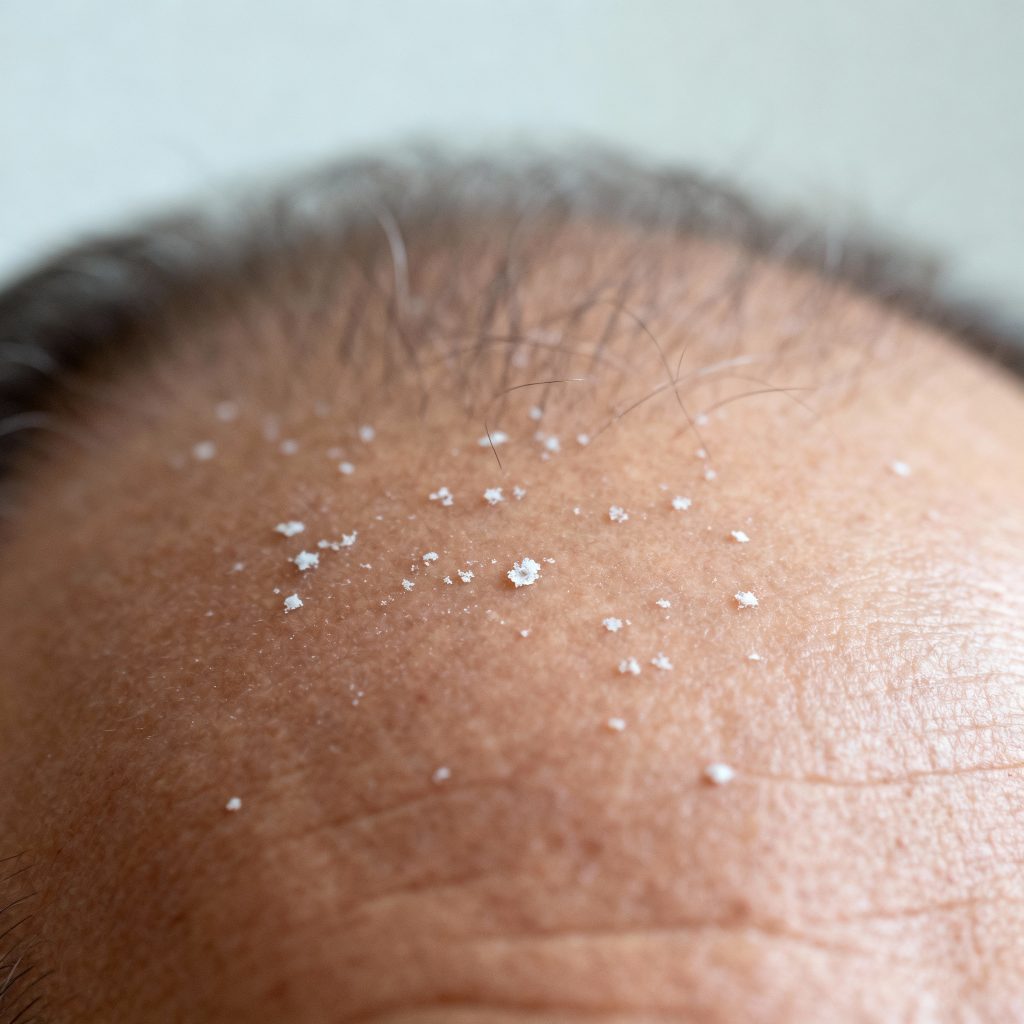
Dandruff is a condition that causes small pieces of dry skin to flake from the scalp.2 It can be a symptom of various underlying factors, including:
- Irritated skin
- Oily skin
- Dry skin
- Sensitivity to hair care products (contact dermatitis)3
Dandruff can also result from other, more severe circumstances (more on that in the next section), but common dandruff is not contagious or dangerous. However, it can be embarrassing and is often difficult to treat.
Why Dandruff Persists
Dandruff that fails to resolve with standard care, like anti-dandruff shampoos, often has roots in conditions beyond simple dry skin or product buildup. Your scalp is a complex ecosystem, and when flaking persists, several factors could be at play.
It Might Not Be Simple Dandruff
One of the most common reasons your anti-dandruff shampoo is not working is that you may not be dealing with straightforward dandruff at all. Seborrheic dermatitis, a more severe, and usually chronic, inflammatory condition affecting oil-rich areas of the body, frequently masquerades as stubborn dandruff. This condition, which affects between 3 and 5 percent of the population, causes red, greasy-looking scales and can affect not just your scalp but also your eyebrows, sides of your nose, and chest.4
Psoriasis is another condition that produces a lot of dandruff-like flaking. Scalp psoriasis creates thick, silvery scales and can be particularly resistant to over-the-counter treatments.5 Unlike typical dandruff, psoriasis involves an overactive immune response that causes skin cells to multiply too quickly.
Fungal overgrowth, particularly of a yeast called malassezia, can also trigger persistent flaking. While this fungus naturally lives on everyone’s scalp, some people develop sensitivities to it, leading to inflammation and excessive shedding that ordinary shampoos cannot control.6
You’re Not Using Products Correctly
Even when you have the right anti-dandruff shampoo, improper use can render it ineffective. Many people do not realize that these specialized shampoos need to sit on the scalp for several minutes to work properly. The active ingredients—including zinc pyrithione, selenium sulfide, ketoconazole, or coal tar—require contact time to penetrate and address the underlying causes of flaking.7
Additionally, alternating between different types of anti-dandruff shampoos can sometimes be more effective than sticking with just one. Different active ingredients target different causes, and your scalp may respond better to a rotation strategy. Pairing your shampoo with an anti-dandruff conditioner can also help, as these products are formulated to moisturize without aggravating the scalp condition.
Your Lifestyle Factors Are Contributing
Stress is a surprising but significant contributor to persistent scalp problems. High stress levels can trigger inflammatory responses throughout the body, including on your scalp, making dandruff worse or more difficult to control.8 Cold, dry weather can also exacerbate symptoms, as can infrequent shampooing that allows oils and dead skin cells to accumulate.
Certain dietary factors may play a role as well. Diets low in zinc, B vitamins, and healthy fats can compromise scalp health, making it more susceptible to persistent flaking.
When to See a Dermatologist for Your Anti-Dandruff Treatment
If you have been consistently using over-the-counter anti-dandruff shampoos for four to six weeks without improvement, with little or no signs of improvement, it is time to consult with a professional. 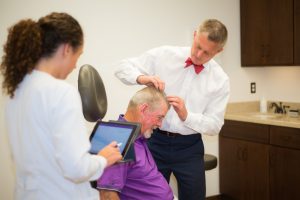 An experienced Greenville dermatologist can properly diagnose what is actually causing your scalp issues and prescribe more targeted treatments.
Warning Signs You Need Professional Help
Certain symptoms indicate you should see a dermatologist sooner rather than later. These include:
- Your scalp is extremely red, swollen, or painful.
- You notice oozing, crusting, or signs of infection.
- The flaking has spread beyond your scalp to your face, ears, or other areas of the body.
- Over-the-counter treatments have made your condition worse.
- Your scalp issues are severely impacting your quality of life or self-esteem.
- You are experiencing significant hair loss along with the flaking.
What to Expect at Your Dermatology Appointment
When you visit a Greenville SC dermatologist for persistent dandruff, the appointment typically begins with a thorough examination of your scalp and a discussion of your symptoms, medical history, and current hair care routine. Your dermatologist may perform a simple scalp examination or, in some cases, take a small skin sample to rule out conditions like fungal infections or psoriasis.
Based on this assessment, your dermatologist can recommend prescription-strength treatments that are not available over the counter. These might include:
- Prescription-strength antifungal shampoos or topical solutions.
- Corticosteroid lotions or foams to reduce inflammation.
- Medications to slow skin cell turnover in cases of psoriasis.
- Immunomodulator treatments for more severe conditions.
- Light therapy for resistant cases.
Professional Dandruff Treatment Options
Rogers Dermatology offers comprehensive approaches to treating stubborn scalp conditions. We do not just address the symptoms; we work to identify and treat the root cause of your persistent flaking.
Customized Treatment Plans
Every scalp is different, which is why we develop personalized anti-dandruff treatment protocols based on your specific condition, scalp type, and lifestyle. For some patients, this might mean prescription ketoconazole shampoo combined with a topical corticosteroid.9 For others, we might recommend a combination approach targeting both fungal overgrowth and inflammation.
We also provide guidance on proper scalp care techniques, helping you understand how often to shampoo, which products to avoid, and how to adjust your routine based on seasonal changes or stress levels.
Treating Underlying Conditions
When dandruff is actually a symptom of psoriasis, seborrheic dermatitis, or another dermatological condition, treating the underlying issue is essential for long-term relief. Rogers Dermatology has extensive experience diagnosing and managing these complex skin conditions, using the latest evidence-based treatments to help patients achieve and maintain clear, healthy scalps.
For conditions like scalp psoriasis, we may recommend biologic medications or light therapy in addition to topical treatments. For seborrheic dermatitis, we often use a combination of antifungal medications and anti-inflammatory treatments to calm the scalp and prevent recurrence.
Taking Control of Your Scalp Health
Living with persistent dandruff can feel like a never-ending battle, but you do not have to fight it alone. While over-the-counter anti-dandruff shampoos work well for many people, they are not always sufficient for more complex scalp conditions. Understanding when to seek professional help is an important step in finally achieving lasting relief.
At Rogers Dermatology, we are committed to helping you understand your scalp condition and finding anti-dandruff treatment solutions that actually work for your unique situation. Do not let stubborn flaking continue to affect your confidence and comfort. Whether you are dealing with simple dandruff that will not respond to standard care or a more complex scalp condition producing a lot of dandruff, professional evaluation and treatment can make all the difference.
References
- Luis J. Borda and Tongyu C. Wikramanayake, “Seborrheic Dermatitis and Dandruff: A Comprehensive Review,” Journal of Investigative Dermatology, May 2026, https://pmc.ncbi.nlm.nih.gov/articles/PMC4852869/.
- Mayo Clinic Staff, “Dandruff,” Mayo Clinic, August 2025, https://www.mayoclinic.org/diseases-conditions/dandruff/symptoms-causes/syc-20353850.
- “Contact Dermatitis,” Cleveland Clinic, March 2023, https://my.clevelandclinic.org/health/diseases/6173-contact-dermatitis.
- “Seborrheic Dermatitis,” National Eczema Association, February 2025, https://nationaleczema.org/types-of-eczema/seborrheic-dermatitis/.
- Dana Berry, “Scalp Psoriasis vs Dandruff,” National Psoriasis Foundation, October 2025, https://www.psoriasis.org/advance/scalp-psoriasis-or-dandruff/.
- Shivaprakash M. Rudramurthy, Prasanna Honnavar, Sunil Dogra, et al., “Association of Malassezia species with dandruff,” Indian Journal of Medical Research, March 2014, https://pmc.ncbi.nlm.nih.gov/articles/PMC4069738/.
- Sean E. Mangion, Amy M. Holmes, and Michael S. Roberts, “Targeted Delivery of Zinc Pyrithione to Skin Epithelia,” International Journal of Molecular Sciences, September 2021, https://pmc.ncbi.nlm.nih.gov/articles/PMC8465279/.
- Yun-Zi Liu, Yun-Xia Wang, and Chun-Lei Jiang, “Inflammation: The Common Pathway of Stress-Related Diseases,” Frontiers in Human Neuroscience, June 2017, https://pmc.ncbi.nlm.nih.gov/articles/PMC5476783/.
- Ann Gotter, “A Guide to Ketoconazole Shampoo,” Healtline.com, April 2025, https://www.healthline.com/health/ketoconazole-shampoos.